The people of Baranya County are waiting in vain for their billions: this is how big dreams turned into an even bigger failure

The Hungarian language version of this article was published on Qubit.hu on October 9, 2025.
Baranya is one of many counties in Hungary where every forint would be put to good use. In August, Szabolcs Rabb, secretary general of the local chamber of commerce, said in a podcast that the region ranks fourth from the bottom among Hungarian counties in terms of investment, and that developments for which money must be raised are essential for the desired change. This alone is a serious problem, as the county does not have access to the resources of the Just Transition Fund (JTF), meaning that tens of billions have been missing from the local economy for almost three years now.
As we explained in our previous article, at the end of 2022, the European Union provided Hungary with €250 million, or approximately HUF 100 billion, from the fund to mitigate the negative effects of measures taken to reduce carbon dioxide emissions. The money was intended for micro-enterprises, small and medium-sized companies, private individuals, and indirectly for workers who lost their jobs due to the transition.
The total of 100 billion forints could have been distributed in the form of grants in three counties: Baranya, Borsod-Abaúj-Zemplén, and Heves. Two of the three counties, Borsod-Abaúj-Zemplén and Heves, were eligible for the money to deal with the situation arising from the planned closure of the Mátra Power Plant and the mines by 2025. However, it turned out that the Mátra Power Plant would not close in 2025, but years later, and in the case of the mines, the situation became even more uncertain, with the possibility that they would not close at all.
The EU also noticed the changes surrounding the power plant and the mines and asked the relevant Hungarian ministries to update the so-called territorial plans for the transition in line with the changes, for example with a new timetable.
"You will receive money if you write down when you will shut down the units and when you will start reducing emissions in light of the new dates. If you don't write this down, you won't get any money," said Csaba Vaszkó, a sustainability expert who has been familiar with the details of the case since the beginning, explaining the EU directives to our newspaper.
However, instead of setting out a timetable or direction, the relevant ministries remained silent. Nearly three years passed, and the process finally reached the point this year where some meaningful progress may be made on the issue.
The biggest loser was actually Baranya County: even though those affected there had nothing to do with the anomalies surrounding the Mátra Power Plant and the mines in Heves County that serve it, they were still unable to spend a single forint from the fund.
What happened? To find out, we spoke to nearly a dozen sources familiar with the IÁA's affairs over the past few months, and we also obtained documents detailing the fund's planning. We tried to unravel the situation from these.
Man proposes
Documents submitted to the EU reveal that Baranya County was actually eligible for funds from the fund for two reasons. Firstly, because following the decline of mining activity in the Mecsek region, the county's industrial structure was unable to renew itself sufficiently, and "the retraining of the workforce and the diversification of the local economy failed to materialize." The fund would have been used in part to address this problem retrospectively.
The other reason for eligibility was that cement and lime production is significant in Baranya, and this sector, in addition to being a major polluter, is also undergoing transformation.
There are two cement factories in Baranya, the Királyházi Cement Factory (Holcim) and the Beremendi Cement Factory (Duna-Dráva Cement Ltd.). When operating at full capacity, each plant emits 500,000 tons of carbon dioxide per year, meaning that each plant is a larger emitter than the city of Pécs. Not far behind them is the Beremend lime plant, which belongs to the Belgian Carmeuse group, with annual carbon dioxide emissions of 300,000 tons.
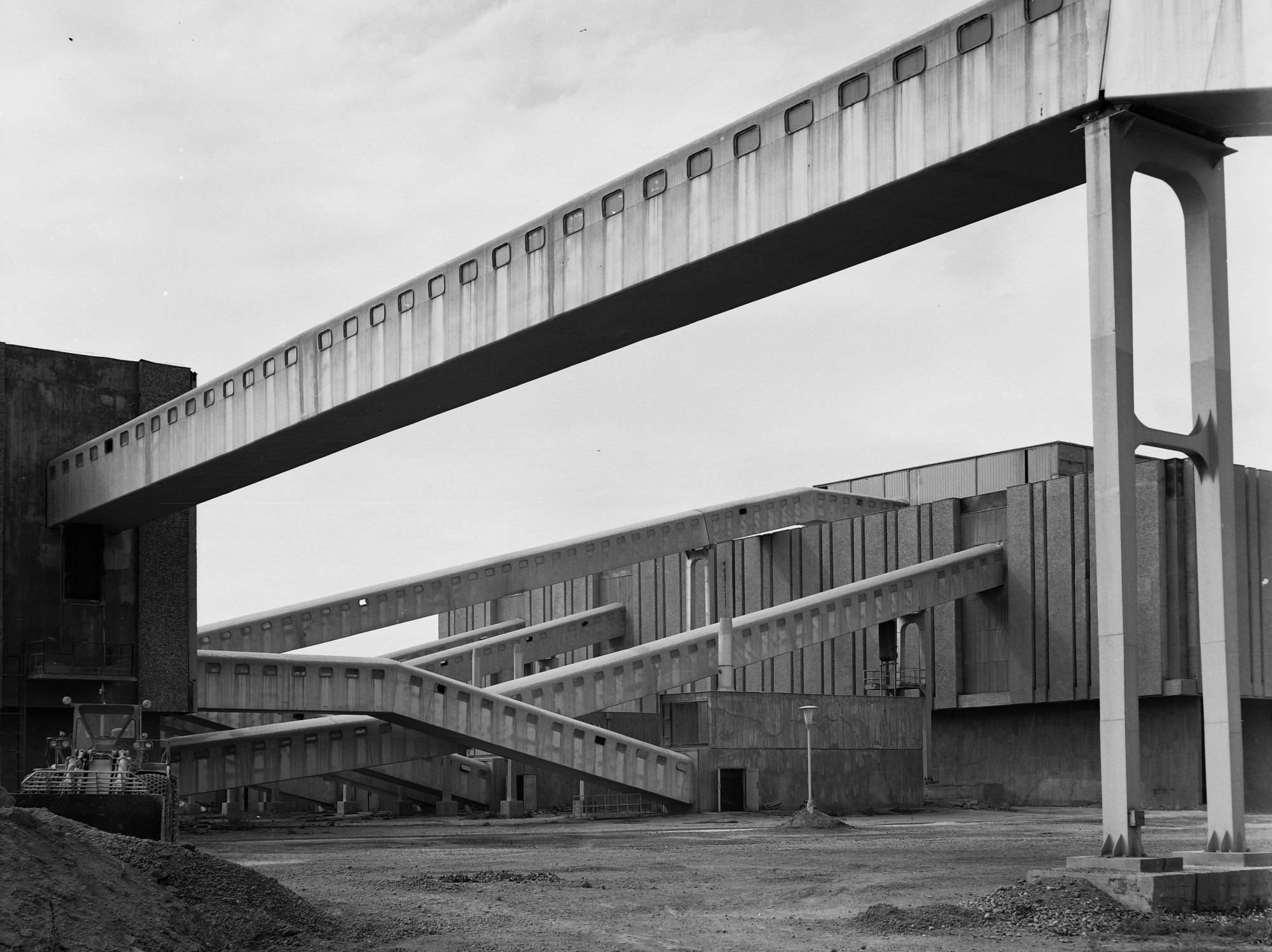
However, cement factories have already begun working on reducing emissions through various technological solutions. The fund would not support them (the EU Innovation Fund is available for this purpose), but rather their subcontractors, for example, so that they can keep pace with the changing market.
"In Baranya, the forced transition began in the 1990s with the retraining of workers in connection with the closure of the mines. But now the new opportunity would be the decarbonization of the industry in one of the EU's most carbon-intensive regions, from which local SMEs could benefit as part of local supply chains," Tamás Hoffmann, managing director of Holcim Hungary Ltd., which operates the cement plant in Királyegyháza, explained the situation to our newspaper.
The bigger goal was to use this "capital injection" to pull the county out of its generally depressed economic environment.
According to the original plans, SMEs could have implemented several types of projects. One of these relates to hydrogen energy storage. Hydrogen energy storage systems typically produce (green) hydrogen gas from electricity generated by solar panels, which is then stored and can be converted back into electricity when needed. (As Portfolio's article notes, this technology is still in the early stages of development.)
SMEs would have been encouraged from the fund's resources to move in this direction, get involved in developments, and assess whether they could move towards hydrogen energy storage. This would have been a no-brainer: cement factories would benefit greatly from being able to operate at night using solar energy generated during the day, and they could also use the energy to power their transport vehicles.
But SMEs would also have had the opportunity to improve their energy efficiency, thereby reducing their energy consumption, pollutant emissions, and energy costs, which would have contributed to improving their competitiveness.
However, the projects that were dreamed up have remained just that for the time being, and for administrative reasons at that. Although separate plans were apparently drawn up for each county, they actually formed one large plan: Borsod-Abaúj-Zemplén, Heves, and Baranya were essentially merged together. The document was submitted to the European Commission as a single entity, and the EU approved it as such.
And as long as the plans for Heves and Borsod-Abaúj-Zemplén counties were not updated despite the EU's request, even though the plan for Baranya county was in order, they could not move forward there either, and their funds were also blocked. We understand that some people suggested treating the three counties separately and examining whether Baranya could be separated from the other two, but in the end, everything remained as it was.
That is, until this year, when the updating of the regional plans finally got underway. In the meantime, however, it has become clear that there is now almost certainly less money available than originally planned: the planned €250 million has been reduced to €200 million, meaning that the amount has fallen from HUF 100 billion to HUF 80 billion. At least, this is the amount that the new plans are counting on, which will obviously also affect Baranya County.
Minus 20 billion forints
The reason for the reduction is the so-called rule of law conditionality procedure. In December 2022, the Council of the European Union decided to suspend 55 percent of the payments for three Hungarian operational programs due to, among other things, corruption in public procurement and insufficient conflict of interest rules, and to prohibit public interest asset management foundations from receiving EU funds. This meant the exclusion of foundation universities from the Erasmus and Horizon programs and the freezing of €6.3 billion.
Last December, it became clear that €1 billion of this had already been lost. The money is deducted year by year, with the first deduction taking effect last December.
According to the documents we have received, the Just Transition Fund has been deducted €50 million, or approximately 20 billion forints, due to the rule of law procedure.
However, it is not only the amount that has changed, but also what the money would be spent on. One of the major changes in the new plans affected SMEs that are particularly important to Baranya County, which slipped to second place among the beneficiaries in terms of the amount allocated to them, behind industrial parks – even though industrial parks were not even mentioned in the original plans.
The latest version of the documents we received stated that HUF 30.8 billion would be spent on the development of industrial parks and HUF 26.4 billion on SMEs. This change has already sparked debate in the counties affected by the Mátra Power Plant (you can read about this in our previous article), but it has also received a mixed reception from stakeholders in Baranya County.
According to one of our sources, there are enough industrial parks in the region, so this will not help them, but according to the University of Pécs, the situation is much more nuanced.
We asked the University of Pécs because it has been involved in the process since 2023: its task was to set up the Baranya Stakeholder Committee, which represents the interests of local stakeholders and makes recommendations on the application system. In fact, it is still operating the committee in order to ensure that the proposals of local organizations continue to reach the designers of the calls for proposals.
In response to our inquiry, the university wrote that the regional plan "includes the conversion of brownfield sites among its planned types of operations, but to our knowledge, the call for proposals will contain the exact details of eligible activities, areas, and intensity. However, in general, it can be said that Baranya County is known to be one of Hungary's most economically disadvantaged regions, where labor migration and weak industrial presence have long hampered development, so we consider all economic development support to be important."
The PTE added: "The creation of industrial parks can provide local SMEs with access to modern infrastructure and logistical advantages, thereby supporting the innovation-based economic diversification of SMEs, which is one of the objectives of the Just Transition Fund."
District heating in Eger
In recent weeks, our sources have also drawn our attention to another interesting connection. This is not related to Baranya County, but rather to a possible conflict of interest that has arisen in connection with one of the members of the so-called Coal Region Committee.
The Coal Region Committee is a consultative forum that plays an important role in the spending of JTR funds. One of its members is Sándor File, who was also a member of the board of EVAT Ltd. until 2024. EVAT Zrt. is the abbreviation for Egri Vagyonkezelő és Távfűtő Zrt. (Eger Asset Management and District Heating Ltd.); and the company's main task is to provide district heating in the region.
Relatively unexpectedly, measures relating to district heating were also included in the plans this year. More specifically, the new plans include an item allocating EUR 32 million for the "development and improvement of renewable energy district heating infrastructure," or almost HUF 13 billion, which is a fairly large slice of the pie, specifically one-sixth of the fund's resources would have gone to this purpose. Since Eger is the seat of Heves County, EVAT Ltd. could, in theory, have applied for funding.
Overall, therefore, district heating was suddenly included in the plans, the content of which is heavily influenced by the Coal Region Committee, and one of the board members of the Eger district heating company was a member of the Coal Region Committee until last year. We wanted to ask Sándor File how these two events are related, if at all, but he did not respond to our inquiry.
We understand that the situation has changed since then, in that it is now far from certain that there will actually be a district heating tender, which would be strange, if only because there are funds for almost the same thing in another fund. In the JTF, it would have been possible to apply for "the development and improvement of renewable energy district heating infrastructure," while in the modernization fund, it would have been possible to apply for "the modernization and improvement of renewable energy-based district heating systems." What's more, the modernization fund has allocated 51 billion forints for this purpose alone.
What is certain, however, is that the pressure is mounting: due to the rule of law procedure, the amount of aid that can be allocated may decrease year by year. In contrast, no calls for proposals have been issued yet, but according to optimistic opinions, we may see the first tenders at the end of this year or the beginning of next year.
We previously contacted the Ministry of Energy and the Ministry of Public Administration and Regional Development with questions about the Just Transition Fund, but they did not respond.
This article was produced with the support of Journalismfund Europe.